Check out this virtual panel discussion at the forefront of research integrity and trust, marking the publication of the FoSci Report 2026: Understanding, Detecting, and Documenting Manipulation in the Research Ecosystem.
Get a view into the data-driven forensic methods required to counter “faked science.” Building on the momentum of the Paris Declaration, our trustworthy scientific ecosystem risks being obscured by a growing corpus of problematic papers and actors. This webinar serves as a call to action to move from fragmented efforts to a coordinated, global discipline.
What you’ll get
- Expert insights: Forefront of detecting author misrepresentation, papermill operations, citation manipulation & cartels, and data manipulation.
- Report highlights: A look at the findings from the inaugural report on the state of forensic scientometrics.
- Insightful panel: A mediated discussion including how we can better advocate for institutional reform and develop shared expertise across the community.
Meet the panel

Moderator
Leslie McIntosh
VP of Research Integrity and Security |
Digital Science
More about Leslie
Dr Leslie McIntosh PhD, MPH is the VP of Research Integrity and Security at Digital Science and dedicates her work to improving research and investigating and reducing mis- and disinformation in science.
As an academic turned entrepreneur, she founded Ripeta in 2017 to improve research quality and integrity. Now part of Digital Science, the Ripeta algorithms lead in detecting trust markers of research manuscripts. She works around the globe with governments, publishers, institutions, and companies to improve research and scientific decision-making. She has given hundreds of talks including to the US-NIH, NASA, and World Congress on Research Integrity, and consulted with the US, Canadian, and European governments.
Now based in London, Dr McIntosh holds a Master’s and PhD in public health with concentrations in biostatistics and epidemiology from Saint Louis University, and a Certificate in Women’s Leadership Forum from Washington University Olin’s School of Business.

Yagmur Ozturk
PhD Candidate | Grenoble Alpes University
More about Yagmur
Yagmur Ozturk is a PhD candidate in computer science in Grenoble Alpes University focusing on building tools for post-publication peer review. She is also one of the maintainers of the Collection of Open Science Integrity Guides (COSIG) project.
Alexandre Clausse
PhD Candidate | University of Toulouse
More about Alexandre
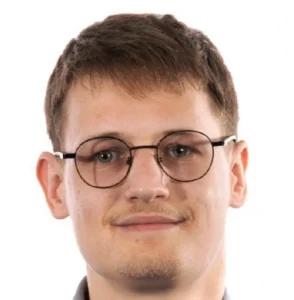
Alexandre Clausse is a PhD candidate in computer science at the University of Toulouse, France. His research focuses on the automatic detection of tortured phrases in the scientific literature, as hallmarks of unreliable publications. He developed the tortured abbreviations miner, a tool to easily spot tortured phrases that do not match their abbreviation. He is a member of the ERC NanoBubbles, on how, why and when science fails to correct itself.
René Aquarius
Scientist | Radboud University Medical Center
More about René
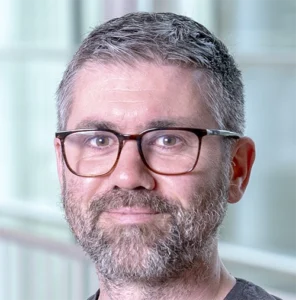
René Aquarius is a biomedical scientist working at the Neurosurgery department of the Radboud University Medical Center in Nijmegen, The Netherlands.
Besides his regular work, which focuses mainly on systematic reviews, as well as vivo, in vitro, and clinical research in the field of vascular neurosurgery, he has also been active as a so-called ‘science sleuth’ for nearly three years. As a science sleuth, he is focusing mostly on finding image-related issues in scientific articles.
Watch now
Have any questions?
We would love to hear from you!