
AI that acts on research. Trust that travels with it.
AI is starting to do research, not just describe it. The next breakthroughs will come from agentic workflows, autonomous and multi-step, that researchers, institutions and funders can actually rely on. For 2026, we are backing the early-stage tools, agents and platforms making that real: AI that acts on research, embedded in the workflows it serves, with provenance, governance and accountability built in.
What is the Catalyst Grant?
The Digital Science Catalyst Grant is an international initiative to support innovation in new software tools and technologies to advance research and create meaningful change. The program supports and invests in early-stage ideas in the novel use of technology with an award of up to £25,000 for the most promising ideas that aid science and further its impact on society.
Who we’re looking for
We want early-stage startups, research projects and moonshot thinkers building agentic tools that:
- Operate across multiple steps, planning, executing and reviewing, rather than answering a single prompt
- Embed in the workflows researchers, institutions and publishers already use
- Carry audit trails, governance controls and provenance, so the people who rely on them can trust them
- Tackle a real problem across the research lifecycle: writing, discovery, evidence synthesis, peer review, funding decisions or research integrity


For example, tools working in these areas:
- Trusted authorship and writing. AI co-writers with transparent contribution logs, autonomous citation and source verification agents, or cryptographic authorship attestation for high-stakes academic work
- Enterprise research workflows. Regulatory-grade evidence synthesis agents, governed knowledge graph workflows with provenance at every step, or explainable drug discovery and target identification tools
- Funding and institutional decisions. Researcher identity and disambiguation agents, automated reviewer matching and COI screening, or grant-portfolio intelligence for programme officers
- Publication integrity. Auditable manuscript screening, citation and figure provenance verification, or multi-step editorial workflow agents with full audit trails
If you’re making AI safe to put in front of an institution, autonomous in service of researchers, with accountability built in, we want to hear from you.
Why apply
The award is up to £25,000, but the grant’s real value is the conversations it starts. Our team comes from research and research software, with decades of experience between us. Most applicants do not win an award, but they can come away with advice, introductions and a sharper idea. We invest in the community because we come from it.

How to test your idea before applying
- Name the research decision your agent affects, and who makes it today (who, when, how often).
- Say where it sits in the research lifecycle: writing, discovery, evidence synthesis, peer review, funding decisions or research integrity. If it isn’t one of these, it probably isn’t a fit this year.
- Name the tool or system it has to live inside, and who already uses that tool every day. We are more interested in something embedded in real work than a standalone demo.
- Check the work genuinely needs more than one step. If a single well-written prompt does the job, it isn’t an agentic workflow.
- Test where it breaks. Give it a task it should refuse, flag or escalate, and record what actually happened.
- Name your outcome metric, for example reviewer hours saved, time to funding decision, or duplicate work avoided.
How to enter
Applying takes one short form and a few minutes.
Who can apply. Anyone with an early-stage idea: founders, research teams, students and individuals. Your tool can be a prototype, a working product or a well-formed concept. We fund early, so you do not need revenue or a finished build.
What to tell us. A clear description of the problem you are solving, your approach, why it fits an agentic, trustworthy workflow, and where you are today. If you have a demo or prototype, show us.
How we choose. Our judges score each application across seven areas: team, problem, solution, competitors, market, progress to date, and fit with Digital Science. Strong applicants are invited to a short interview with a live demo (where applicable) and a few questions.


Key dates
- Applications open: Tuesday 1st September 2026
- Applications close: Monday 5th October 2026, 17:00 BST
- Judging: Monday 12th October to Friday 20th November 2026
- Winners announced: week commencing Monday 30th November 2026
The award. Up to £25,000, which can be split across more than one recipient.
Apply for the 2026 Catalyst Grant
What to include in your proposal
Please provide a proposal of no more than 1,500 words, using the headings below. If a section does not apply to you, say so briefly and move on.
1. THE PROBLEM
- Whose problem is this, and what do they do about it today?
- How often does it come up, and what does it cost them in time, money or risk?
2. YOUR WORKFLOW
- Walk us through what your agent does, step by step, from trigger to output.
- Which steps run autonomously, and where does a person review, approve or override?
- Which existing tool or system does it run inside, and who uses that tool today?
3. TRUST, AUDIT AND GOVERNANCE
- How does a user see what the agent did, and why?
- How do you establish provenance for the sources and the outputs?
- What happens when the agent is uncertain or wrong, and who is accountable?
4. TEAM
- The founders, their backgrounds, key people and any advisors.
- Why you picked this problem, and what domain expertise you bring.
5. WHERE YOU ARE TODAY
- Current stage: concept, prototype, working product, or in use with real users.
- What exists now. Include links, and a demo if you have one.
- Any users or customers, and what you have done to test the idea.
6. ALTERNATIVES AND COMPETITORS
- How is this solved today, including by doing nothing?
- Who else is working on it, and at what size and stage? Include URLs if you can.
- How are you different?
7. WHERE THIS GOES
- Your longer-term vision for the product.
- If it is a commercial product, who would pay and what is your pricing thinking?
8. FIT WITH DIGITAL SCIENCE
- Which part of the research lifecycle do you sit in, and which audience: researchers, institutions, publishers, funders or industry.
- Why would you want to work with us on this problem?
9. BUDGET
- How you would spend up to £25,000, and what it would let you do that you cannot today.
View past winners
2025
FigureTwo
Jeff Lang
Pathfinder (from company Syntheos)
Caleb Smith
2024
PostPub
Dr Achal Agrawal
Dr Moumita Koley
VIRUS
Dr Lonni Besançon
Dr Fabrice Frank
2023
Atom
Tomer du Sautoy
Hamilton Evans
Future Metric
Dr Amy Nelson
Dr Mohamad Zeina
2020
Sciflow
Dr. Carsten Borchert Frederik Eichler
SciSwipe
Mariëlle van Kooten
Anton Pols
2019
BPT Analytics
Dr. Andrii Buvailo
Nikos Tzagkarakis
MLprior
Denis Volkhonskiy
Vladislav Ishimtsev
Nikita Klyuchnikov
Pavel Shvechikov
Intoolab
Nikos Tzagkarakis
2018
Cadmore Media
Violaine Iglesias
Simon Inger
ConfRef.org
Kai Eckert
Aliaksandr Birukou
Andrey Gromyko
Paper Digest
Dr Yasutomo Takano
Dr Cristian Mejia
sci.AI
Roman Gurinovich
Rationally
Kristin Lindquist
Scismic
Danika Khong
Elizabeth Wu
2017
Ripeta
Dr Leslie McIntosh
Open Syllabus Project
Joe Karaganis
Researchably by FuseMind
Vivo on the Blockchain
Mike Conlon
Datax
Kevin Wong
Animate Your Science
Tullio Rossi
Katalysis
Alex Tran Qui
Eveline Klumpers
SOPBuilder
Sylvain Longet
Worldbrain
Oliver Sauter
2016
Figures
Xavier Armand
Dominic Benoscek
Chuong Nguyen-Thanh
HackScience
Ali Afshar
Ignacio Willats
HipDynamics
Maximilian Kerz
Davide Danovi
Writefull
Juan Castro
Alberto Villar
2015
Ada Lovelace Day
Suw Charman-Anderson
Penelope
James Harwood
TetraScience
Alok Tayi
2013
Authorea
Nathan Jenkins
Alberto Pepe
Bionetbook
Oren Schaedel
2012
Newsflo
Ben Kaube
Tom Poole
2011
Nutonian
Michael Schmidt
PsyToolkit
Reuben Robbins
Hear from previous winners
FigureTwo launches with State of Open Data showcase
February 12, 2026As part of its official launch, Catalyst Grant winner FigureTwo has reimagined figures from the State of Open Data 2025…

Digital Science announces Catalyst Grant winners, supporting AI-based innovations to benefit research
February 29, 2024
2019 Catalyst Grant winners: AI‑powered innovations in pharma analytics & research tools
September 25, 2019


Resource Library
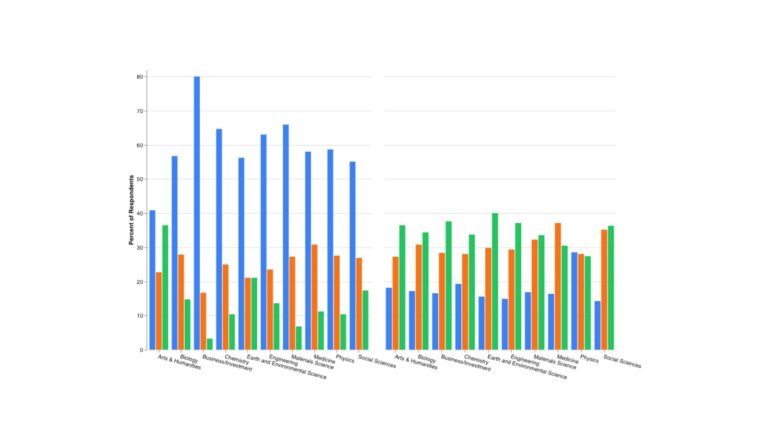
FigureTwo launches with State of Open Data showcase
2019 Catalyst Grant winners: AI‑powered innovations in pharma analytics & research tools
Meet sci.AI: The AI tool transforming hypothesis testing
Reach out
For any other inquiries, we’d love to hear from you. Contact the VP Portfolio Development, Steve Scott.
